Showing posts with label insipiration. Show all posts

06 June 2011

Donald Judd as Inspiration

Seeing the completed back gate and pergola reminded me of one of our inspirations: Donald Judd.

Judd is a relatively iconic modernest artist (and architect, frankly) of the 20th century. I was introduced to his life and work first in Marfa, Texas, his adopted home. There he made quite a mark, adopting the landscape and the area's buildings as a palate for his stark modernist works. He purchased an abandoned airfield and its buildings and many of the buildings in the town of Marfa itself.

In my opinion, one of the best places to visit on a trip to Marfa is Judd's home, called La Mansana. His home complex sits in the middle of town, and is only open by scheduled tour. Docents no longer allow photography, which in my mind is complete ridiculousness, but when we visit in 2006, photos were allowed. And I post some of those here.

Here, inside the tall adobe walls are some of the inspiring views from Judd's personal compound, including this substantial pergola covered in grape vines that conceals a dark black Judd outdoor table and seats.


Judd's work is very geometric, with squares as a major theme. He seems to place a lot of emphasis on objects aligning on axes as well as object spacing and repetition with variation.

The pergola above was most definitely a conscious and subconscious inspiration for our own. The wide slats and spacing, the geometrical precision. The heftiness.

Next to the pergola is a stand of cottonwood in rows and this beautiful raised pool made of cement.


Gorgeous and simple. Strangely organic and natural but also very controlled and linear. I'm not sure if Judd invented the idea of the raised concrete pool, but it can be readily found in modern landscapes around this state and beyond. Either he was picking up on a trend, or he's influenced a number of landscape architects and architects around Texas. 

Here's another table, placed right in the middle of the harsh West Texas courtyard. No shade. But completely in line with the entrance to the main house in the background. This is probably an amazing table to sit out on a cool West Texas evening as the sun goes down and the Milky Way appears across the night sky. Candles. Barbacoa tacos. Ceramic plates. Thick glasses with cool sangria. Can you imagine? 

Even the chicken coops below are built with Judd's typical square cross-beam style. No chickens now, unfortunately, but inspirational nonetheless.


There are hundreds more inspirations than Judd, of course, as they infuse our minds both subtlety and not. And anyway these are just a very paltry example of Judd's legacy that I'm including. I highly recommend a visit.

10 February 2011

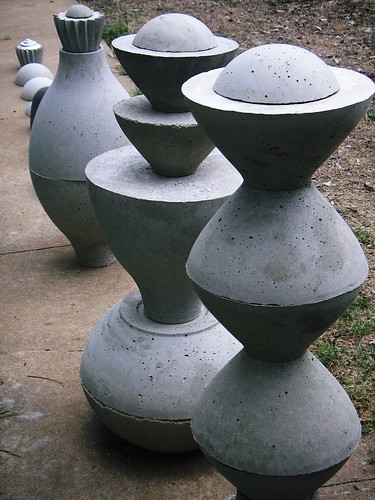
inspiration: Cement Sculpture at PCO Designs

I've begun to dabble a bit in concrete construction, building a couple of bird baths and planters. And I can't wait for it to get a bit warmer so I can begin experimenting again.

That said, I am a total amateur compared to Paul C. Oglesby, Jr. over at PCO Designs. That's his work to the left. It's all very space-age and has a slight biological feel to it. Head over to his site and check it out.

Amazing!

(Hat tip: Stephanie Nance.)

21 January 2011

inspirations: Meadows

A few meadow-y inspirations.

Chisos Mountains.
Chisos Mountains. Lots of feathergrass.
A John Greenlee meadow.


John Greenlee meadow photos from Greenlee & Associates.

17 January 2011

31 December 2010

design: Mysterious Lane

...We stumbled upon this fantastic lane in an alleyway in an old neighborhood in Charleston, SC, hidden amongst all the homes from the 18th, 19th, and 20th century. The combo of pavers - lined against a hard edge on the outer side but rough on the inner side - is really charming and inviting. The space between is a granite gravel used around the city. This makes a great design for a driveway, but would be equally appealing as an entry walk.

20 December 2010

ideas: Wild Gardening

After watching this on Garden Rant, I just had to repost here. This is a video slideshow of Rick Darke talking about wild gardening as it relates to his work updating and reissuing The Wild Garden, originally by William Robinson. Seems like a must-read.

11 December 2010

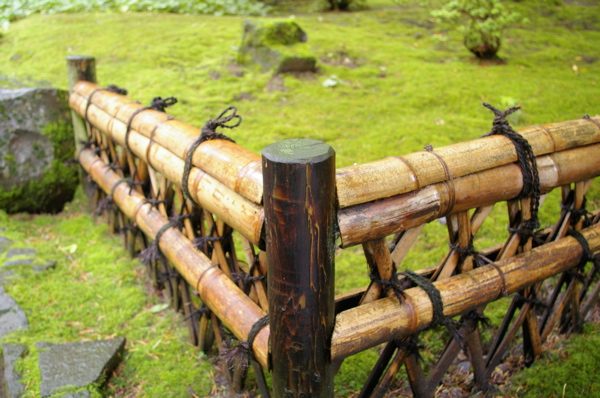
gardens: Fence Inspirations from Portland

Just running through some archived photos and found this collection of fences and gates from the gorgeous and inspirational Japanese Gardens in Portland, Oregon.


21 June 2010

gardens: Chinese Garden in Portland

Portland, Oregon has the luxury of having two very distinct and very lovely Asian gardens: the classical Chinese garden and the Japanese garden. Actually, the two are like lessons in contrast (in a way): the Chinese garden inhabits a city block right downtown in a sort of gritty old town "Chinatown" area (mostly, I saw a lot of halfway houses, people with mental health problems and charity organizations). The Japanese garden, on the other hand, lives atop a hill overlooking the city in Washington Park on the west side.

But while the settings and parts of the styles contrast, Japanese-style gardening did evolve from Chinese gardening, so one can see threads of relatedness.

The Chinese garden (through force of location) is all about courtyards and framing small views. When you are there, you completely forget that you are surrounded by urbanity.


[The entrance courtyard at the Chinese garden, drawing visitors into its many layers.]

The Japanese garden was also definitely about framing views, but was very expansive and had more...space. (I'll post images of the Japanese garden in a subsequent post.)

The Chinese garden was "rougher," with rough stones and lots of patterned stonework, while the Japanese garden seemed to have very smooth stonework and tightly clipped plants. The Japanese garden also used tons and tons of bamboo and cedar fencing, while the Chinese garden focused on stone walls and masonry.


[A rough vertical stone juts out from a display of other stones with holes similar to those we find creating the aquifer here in the Hill Country. The Chinese garden used these vertical stones as a theme throughout.]

In the end, I got the sense that the Chinese garden was more of a "garden of home" - a garden that a dignitary or someone living in a city would actually have and entertain in. The Japanese garden, on the other hand, felt like a "garden for gardens" - a place where you get away from the city and meditate on the idea of gardens, or just drink a cup of tea.


[My favorite view within the Chinese garden. A courtyard with a "cracked ice and plum blossoms" pattern of stonework on the ground. The round gateway frames the view of another courtyard and several bonsai trees. Perfect.]

Either way, each of the gardens were some of the more amazing gardens I've ever see, and full of lessons for the home gardener.

12 September 2009

Chisos Mountains: Part 2

Natural Inspiration in West Texas. [This is part 2 in a series on the Big Bend area, from natural to built environments. Part 1 is here.]

The view heading up the road into the Chisos.


This might be a bit hard to see, but here is an understory of Mexican feathergrass with agaves spiked throughout. A great combination, and the agaves seem more like the "whale's tongue" agaves I see for sale around here - squatter and more compact than the huge "century plants."


I think this little beauty is Scarlet Bouvardia or Trompetilla (Bouvardia ternifolia). There were so many flowers blooming up in the Chisos, and I only captured a few.


This path below is lined with agave and prickly pear with "tunas" or fruits in the background. Apparently, Big Bend has the most species of cactus of any national park in the U.S.


Another great combination - the purple of the tunas with the yellow of whatever that plant is, which was blooming everywhere.


This was common on the mountain too. It's a nice peach blossom on gray leaves and stems. I've seen this planted and growing near the water tower at the Wildflower Center, but can't recall the name.


A fabulous pairing of sotol and agave.


A crazy red flower - another unidentified.


And I'll leave the post with this picture of Mexican feathergrass lining a trail and framing the aromatic pine.

10 September 2009

Chisos Mountains: Beautiful and Inspiring

Natural Inspiration in West Texas. [This the first post planned in a series that I'll make on the Big Bend area, from natural to built environments.]


We just returned from a short jaunt out to West Texas, to clear the mind and liberate the soul. There's just something about those wide open spaces. To our great surprise, the Big Bend-Marfa-Marathon area has had a cool and rainy summer, so everything was lush and green compared to Central Texas. Temps were about 20 degrees cooler during the day than here in Austin - hovering around 80 - and during the 65 degree nights, my thin blood required a long-sleeved pullover.

On Saturday, we headed south from Marathon (where we stayed at the Gage Hotel) to Big Bend National Park and the Chisos Mountains. When approaching the Chisos from far away, the mountains look rather barren. But the closer you get the more they reveal themselves to you.

We hiked the Lost Mine Trail - a short 5 mile hike up the mountain that took a while because both John and I were in love with everything happening there. Big blue throated hummingbirds zipping around, acorn woodpeckers squawking like parrots, and rufous-sided towhees shuffling in the leaf litter.

The woodland-grassland mountain landscape was gorgeous and totally inspiring from a gardening perspective. Below, you can see a mountain grassland anchored by Mexican feathgrass (Stipa tenuissima), grama grass (I think side-oats), and other grasses. Small shrubs and perennials like damianita (Chrysactinia mexicana) fill in the spaces to make a dense cover.

It was cool to see Mexican feather grass in its native habitat (it does great in Austin too). Look how everything hugs the well worn path. I love the simplicity and calmness from the repeated grasses, but they hide a great diversity of plants. Bees were everywhere...


The red blooms in this photo below are mountain sage (Salvia regla), another Chihuahuan Desert native in the highlands. This is also growing in my garden, but won't be blooming until October and November. The hummingbirds were all over this stuff, defending their little feeding territories.


Check out this beautiful arching grass. Don't know what it is yet...

I have a ton more photos and will be posting more soon. Blogger was giving me a hard time tonite. So, this is the first in a series of posts...