
09 August 2006
A sprinkle here a sprinkle there
The sprinklers outside my office ran for at least 4 hours this morning, mostly watering bare patches of ground beneath dense live oak trees (but perhaps giving a magnolia some needed thirst-quenching in what I believe to be the far western edge of its natural range). Good idea or bad?

02 August 2006
Here birdie birdie
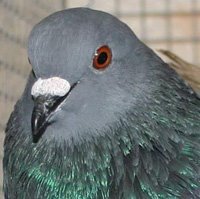 Though some bird populations are high on campus, I'd imagine that diversity isn't that great. (It would be interesting to know if anyone has studied this.) On a typical day around campus you can pretty easily run into one if not all of the big 7: great-tailed grackles, feral pigeons, blue jays, white-winged doves, mourning doves and sparrows. If you are eating at the Turtle Pond, beware the pigeons, as they very persistently pester you for your lunch. (It's very curious or obnoxious, depending on your perspective, that we humans feel this great urge to feed other animals. This could be the subject of an entirely different post.)
One scientist on campus has turned the pigeons into a project. If you've noticed the bands on some of the birds' legs, you've seen the work of Dr. David Hall and students involved in the UT Pigeon Project. This project is looking at several aspects of this urban bird, like their parasites (yum), population growth and control on campus, and how they move about this urban campus environment (trust me, they follow the people feeding them...).
Though all these "common" birds shouldn't be considered uninteresting, if you are looking for something a little different, head to Waller Creek. For obvious reasons, it seems to be the hub of diversity on campus. Herons and various songbirds flit through there daily. I recommend taking a lunch on the shore and watching for them (just beware the poison ivy!).
Learning the landscape

If you're ever wondering what tree towers over you, which shrub is blooming outside your classroom, or why the landscapers on campus are choosing some plants over others, check out the Landscape Services website. The presentations on their webpage offer identification for ground covers, shrubs and trees.
It seems that there's a movement toward drought-hardy species (really? here in Central Texas?), which is good. But I'm still not sure why there's so much water-hogging grass and Vinca. I think it'd be great if we had some more "lawns" like the one by the Blanton. (That begs the question, do landscapers on campus have the training and know-how to maintain native lawns?)
Anyway, glad to have found Landscape Services website. They play such a HUGE role in campus ecology.
It seems that there's a movement toward drought-hardy species (really? here in Central Texas?), which is good. But I'm still not sure why there's so much water-hogging grass and Vinca. I think it'd be great if we had some more "lawns" like the one by the Blanton. (That begs the question, do landscapers on campus have the training and know-how to maintain native lawns?)
Anyway, glad to have found Landscape Services website. They play such a HUGE role in campus ecology.
Subscribe to:
Posts (Atom)